
Checking Criminal History in Rensselaer County
No official tool merges every Rensselaer County police report, jail intake, local-court file, and DCJS rap sheet. Begin with the place where the event occurred and the court that had jurisdiction. Supreme and County Court felony files center in Troy. City, Town, and Village Courts retain their own lower-level matters. WebCriminal can point to current cases in participating courts, but the originating clerk remains the source for filed papers, older material, and a certified disposition.
Have the full legal name, date of birth, likely event date, place, and any case or report number ready. Exact spelling matters. An alias or old local case may not surface in the first search. Use this order to keep each Rensselaer County record tied to its custodian:
- Identify the court or arresting agency from the event location and paperwork.
- Search WebCriminal for a current case, or ask the proper clerk about older files.
- Use OCA CHRS when a statewide exact-name and birth-date court summary is needed.
- Request the docket papers or Certificate of Disposition from the court to confirm the outcome.
- Use fingerprint-based DCJS Personal Record Review for your own official New York history.
The Rensselaer County government directory shows the county offices that route local record questions.

That directory is a starting point, not a substitute for choosing the court, sheriff, probation office, or other office that created the record.
Four Rensselaer County Record Custodians
One alleged event can create four records with different purposes. Police write an incident or arrest report about what officers claim occurred. The correctional facility creates a booking record if the person enters county custody. A prosecutor chooses the charge to file, and the court builds a docket through arraignment, motions, plea or trial, disposition, and sentence. DCJS then links reportable arrest data to dispositions by fingerprints.
The practical flow is: Police report → Jail booking → Court case → DCJS arrest cycle. These sources overlap, but none can stand in for all the others. A booking proves custody processing, not guilt. A court dismissal may appear after the arrest record was made. A missing disposition on a rap sheet can reflect a reporting gap rather than a conviction. In Rensselaer County, the safest reading compares the dates, identifiers, charges, and final court outcome.
| Record | Main custodian | Best use |
|---|---|---|
| Incident or arrest report | Arresting police agency | Alleged event and officer narrative |
| Booking record | County Sheriff and jail | Intake and current or past custody |
| Case file | Originating court clerk | Filed charge, docket, and outcome |
| Rap sheet | DCJS | One's fingerprint-linked New York history |
New York Official Background Checks
The New York State Division of Criminal Justice Services maintains the Computerized Criminal History repository. Its Personal Record Review is for the subject or the subject's attorney, not a public search for another person's rap sheet. IdentoGO captures fingerprints. Service code 15464Z requests a suppressed response, while 15465F requests an unsuppressed response that includes the requester's sealed or suppressed events. The current fee is $17.50, and DCJS says results usually arrive by mail in about three to four weeks.
OCA CHRS is different. Its Direct Access court-history search costs $95 and uses an exact full first name, full last name, and date of birth. It can report public pending matters and convictions sent by New York criminal courts, but it is not fingerprint-confirmed. Sealed matters are excluded, and older Town or Village Court reporting can be incomplete. An FBI Identity History Summary is the subject-only federal and multistate route, with an $18 FBI fee plus any fingerprint or channel cost.
| Official route | Identity method | Fee | Scope |
|---|---|---|---|
| DCJS review | Fingerprints | $17.50 | Your New York repository history |
| OCA CHRS | Exact name and DOB | $95 | Public statewide court summary |
| FBI summary | Fingerprints | $18 plus capture costs | Your FBI identity history |
Rensselaer County CHRS Record Limits
CHRS can fail even when a Rensselaer County court record exists. It searches exact names and dates of birth, not fingerprints. A typo, name change, alias, or wrong birth date can miss the intended file or confuse two people with similar names. Its town and village coverage also has historical limits. The result is a court-history product, not a complete police, jail, federal, or DCJS repository record.
Enter the full first and last names and exact date of birth. Add a middle name or initial when known. Check the spelling before paying because each request costs $95. If the result seems incomplete, search WebCriminal for a present case and call the likely clerk with the event location and date. The court's Certificate of Disposition provides the sealed statement of charge, conviction, conviction date, and sentence.
Note: An empty exact-name result is not proof that no Rensselaer County criminal record exists.
Criminal Record Types
Rensselaer County criminal records differ by the act that created them. An incident report records allegations. Booking material tracks intake and release. The accusatory instrument states what the prosecutor or grand jury placed before a court. Court files then record appearances, pleas, motions, outcomes, and sentences. A warrant is a judge's directive and may be withheld while active or sealed.
Other sources answer narrower questions. County probation files document community supervision but detailed reports and plans are restricted. DOCCS holds state prison and parole data. The DCJS registry publishes Level 2 and Level 3 sex offender entries online, while lower-risk and pending-level checks use a phone channel. Each source should be read within those limits.
- Police record: incident facts, alleged conduct, agency, and officer narrative.
- Booking record: county intake, initial charges, custody, bail, and release.
- Court record: filed charges, docket events, disposition, and sentence.
- Supervision record: probation or parole status, with case details often restricted.
- Registry record: public safety information released under New York law.
Rensselaer County Jail Records
The Rensselaer County Correctional Facility at 4000 Main Street is the local source for booking and custody information. It has 473 beds in twelve direct-supervision pods and classifies people at intake for minimum, medium, or maximum custody. County pages do not provide a standard live public roster. Call the jail at 518-266-1730, check the official New York VINELink service, or submit a focused records request when the web offers no answer.
The Sheriff's official page lists the agency's main and division contacts.
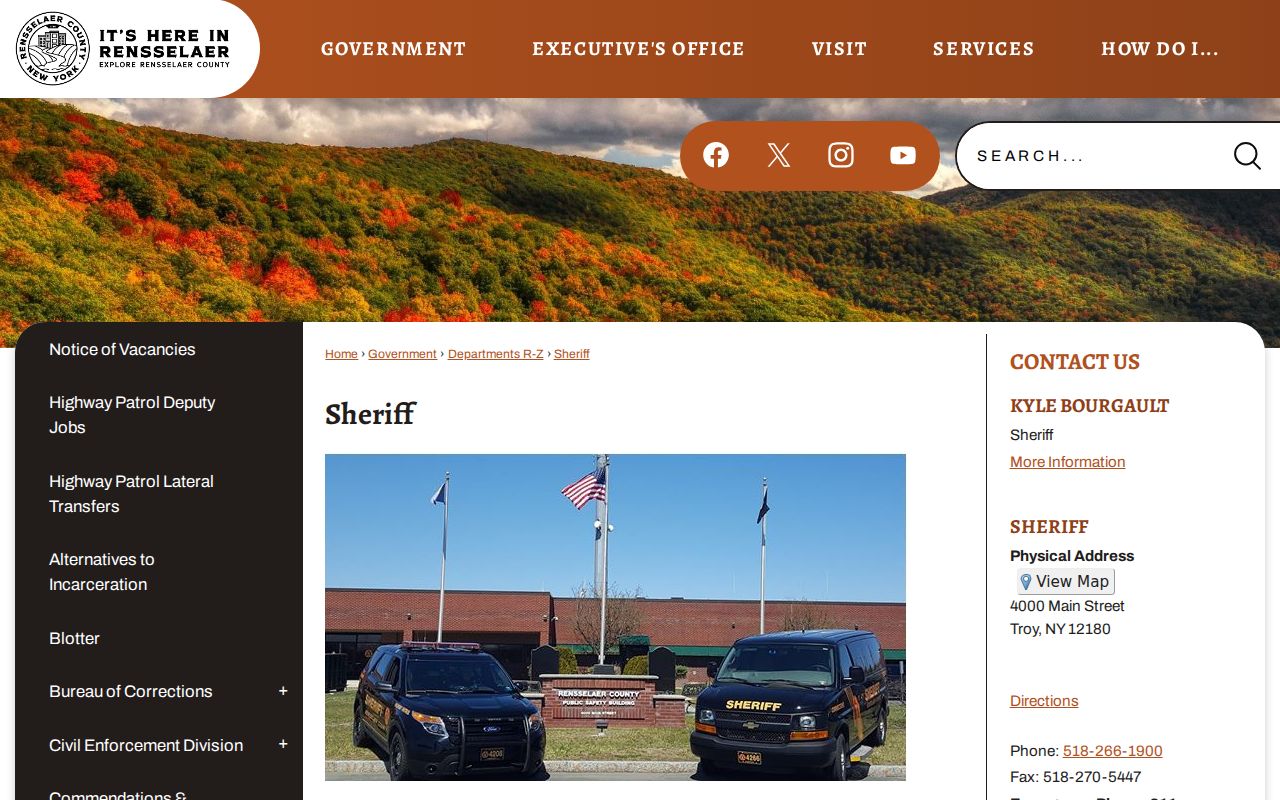
The listed numbers help separate a custody question from investigations, civil process, or a general sheriff record request.
The county also documents the correctional facility and its direct-supervision design.
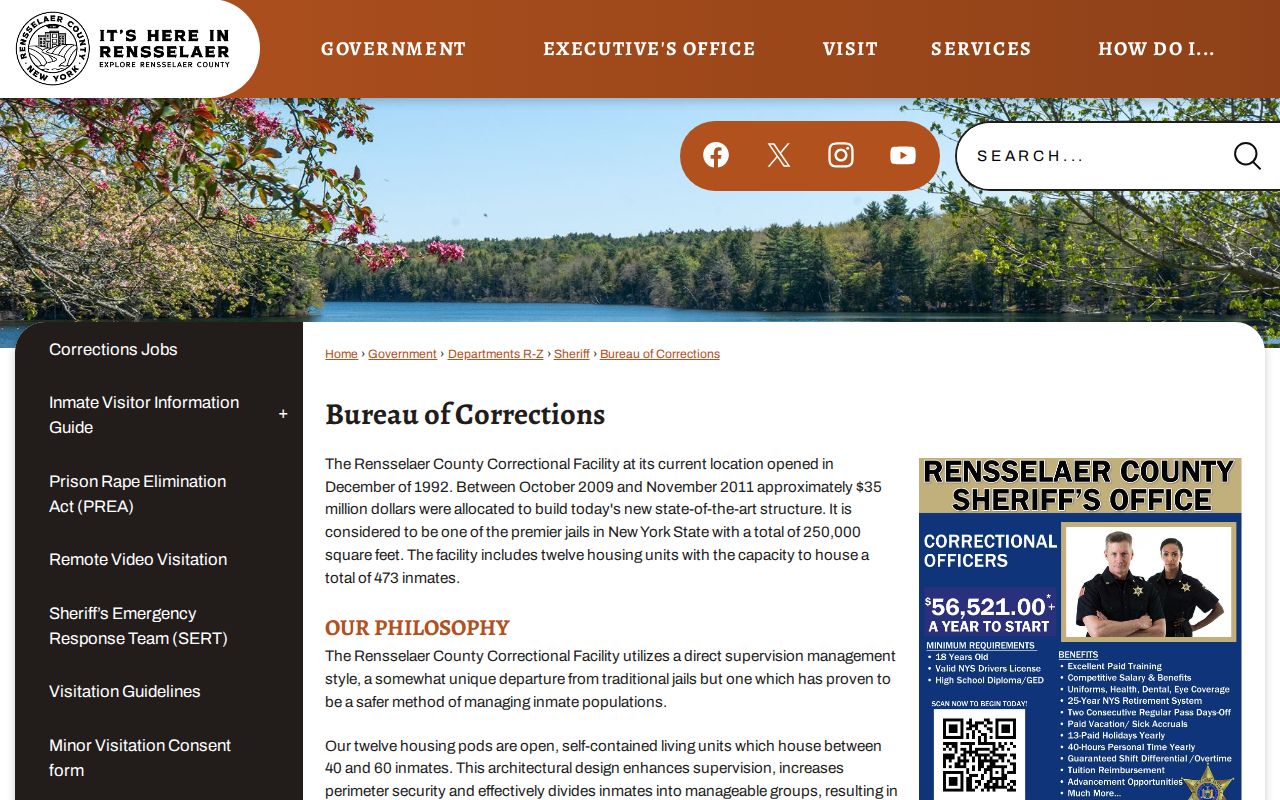
Facility details give context to a booking entry, but medical, mental-health, security, and housing-pod information should not be expected in a public record.
Inside a Rensselaer County Criminal Record
The fields depend on the source. A public case view may show the court, docket number, defendant, filing or arrest date, top charge, statute, class, status, next appearance, judge, attorney, disposition, and sentence. A booking entry centers on the booking number, received date and time, arresting agency, intake charge, custody or release status, and bail. A DCJS rap sheet uses fingerprint-linked identity data and arranges the history by arrest cycles.
Read the disposition field before drawing a conclusion. An initial arrest label can change after the district attorney reviews the case. A blank outcome is not a conviction, and a booking record cannot establish the final charge. The court file is the best source for what was prosecuted and how it ended.
| Name & Identifiers | Legal name, aliases, birth data, docket, booking, NYSID, or other source-specific numbers. |
|---|---|
| Arrest / Booking Data | Date, agency, intake time, alleged charge, bail, custody, and release information. |
| Charges & Statutes | Offense label, New York statute, and felony, misdemeanor, or violation class. |
| Disposition | Conviction, dismissal, acquittal, or another recorded outcome for each charge. |
| Sentence | Jail, prison, probation, fine, restitution, or other court-ordered terms. |
| Custody / Supervision | County jail, DOCCS prison, parole, or probation status when publicly available. |
Correcting Rensselaer County Record Gaps
If your DCJS record lacks a court outcome, start with the court named in the arrest cycle. Ask the clerk to confirm the docket and obtain a Certificate of Disposition. Compare names, arrest dates, charges, and identifiers. Then follow the challenge directions that come with DCJS Personal Record Review and supply the court proof requested by the repository.
The criminal court and the County Clerk may split tasks for Supreme and County Court material, so call before ordering. The official Rensselaer County court page identifies the courthouse and current clerk contacts.
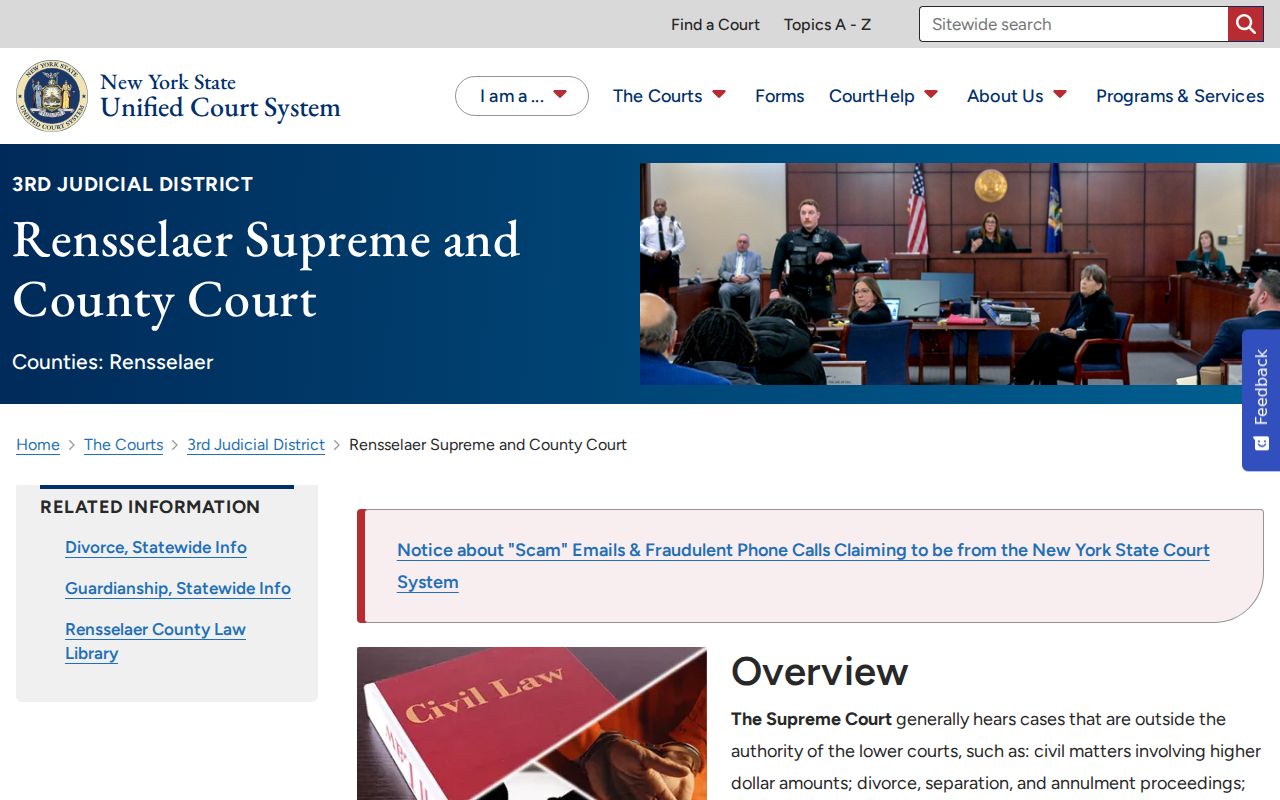
A certified court outcome gives DCJS a firm basis to reconcile a fingerprint-linked arrest cycle that still appears open or incomplete.
Public Access Laws in New York
New York Freedom of Information Law applies to agency records, but court files follow judiciary access channels rather than the county FOIL form. Agencies may redact or withhold active investigative material, juvenile information, confidential sources, medical data, victim identifiers, and details whose release would invade personal privacy. A requester can ask for any reasonably segregable nonexempt portion instead of treating one protected detail as a bar to the whole record.
Key Statutes:
Public Officers Law §87 sets the access rule, exemptions, and reproduction-cost framework for agency records.
Public Officers Law §89 sets request procedures, response duties, and administrative appeal rights.
Executive Law §837 assigns DCJS its repository and criminal-history dissemination duties.
CPL 160.50 seals records after specified favorable dispositions.
CPL 160.59 permits court-ordered sealing of certain older convictions.
Inspection under FOIL is free. Paper copies no larger than 9 by 14 inches generally cost no more than 25 cents per page, while other media can carry actual reproduction costs. An agency normally must acknowledge a written request within five business days by granting it, denying it in writing, or giving an approximate decision date.
Rensselaer County FOIL Record Requests
The county's CivicPlus Form Center is the broad fallback for identifiable sheriff or county administrative records that lack a dedicated request path. A useful description names the agency, date, location, people involved, report or case number if known, and the exact item sought. State whether the request is for an incident report, arrest or booking record, CAD entry, 911 audio, body-camera video, jail log, or policy because each record has a different search and redaction path.
The Rensselaer County FOIL form collects requester contact details, a record description, and delivery preferences.
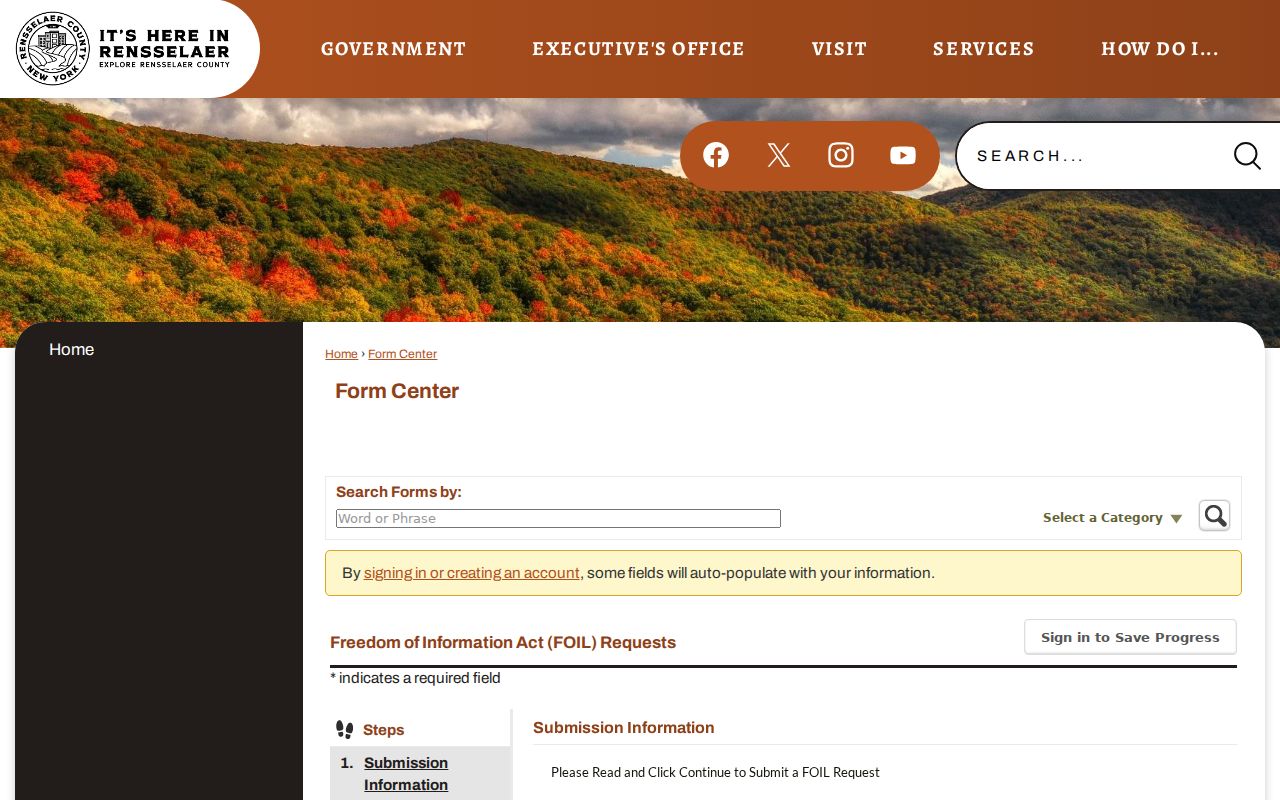
The form does not replace a request to a court clerk. Troy Police and City of Rensselaer Police also keep their own reports, so city records go through the city agency or municipal FOIL channel.
Sealed, Expunged, and Restricted Records
New York chiefly uses record sealing. Qualifying acquittals and dismissals are generally sealed under CPL 160.50, while many violations and traffic infractions receive partial sealing. Youthful-offender adjudications and juvenile delinquency records are confidential. Sealing blocks ordinary public visibility but does not always destroy the underlying record or prevent every access authorized by law.
CPL 160.59 lets a person apply to seal up to two eligible convictions after a ten-year waiting period measured from conviction or release from incarceration, whichever is later. At most one may be a felony. There can be no pending criminal case, and sex offenses, violent felonies, and other listed serious offenses are excluded. The process begins with a Certificate of Disposition for each conviction. The certificate generally costs $5 outside New York City, while the sealing motion has no filing fee.
Clean Slate took effect in 2024, but OCA has through November 16, 2027 to implement the statewide system. Eligible misdemeanors use a three-year clock and eligible felonies an eight-year clock, subject to exclusions and pauses for a pending case or current supervision. Do not assume an eligible Rensselaer County record has already disappeared from public view. Verify the court action and DCJS implementation.
Rensselaer County Custody Record Paths
Choose the custody source by the person's stage. Call the county jail or use VINELink for recent local custody. Use DOCCS Incarcerated Lookup only after a state-prison commitment, and Parolee Lookup for New York community supervision. County probation is a separate system. The Rensselaer County Pretrial Release Unit screens some people held at the jail and supervises court-ordered release before trial, which is not a conviction or probation sentence.
The Rensselaer County Probation page lists adult, juvenile, investigation, supervision, pretrial, and diversion contacts.
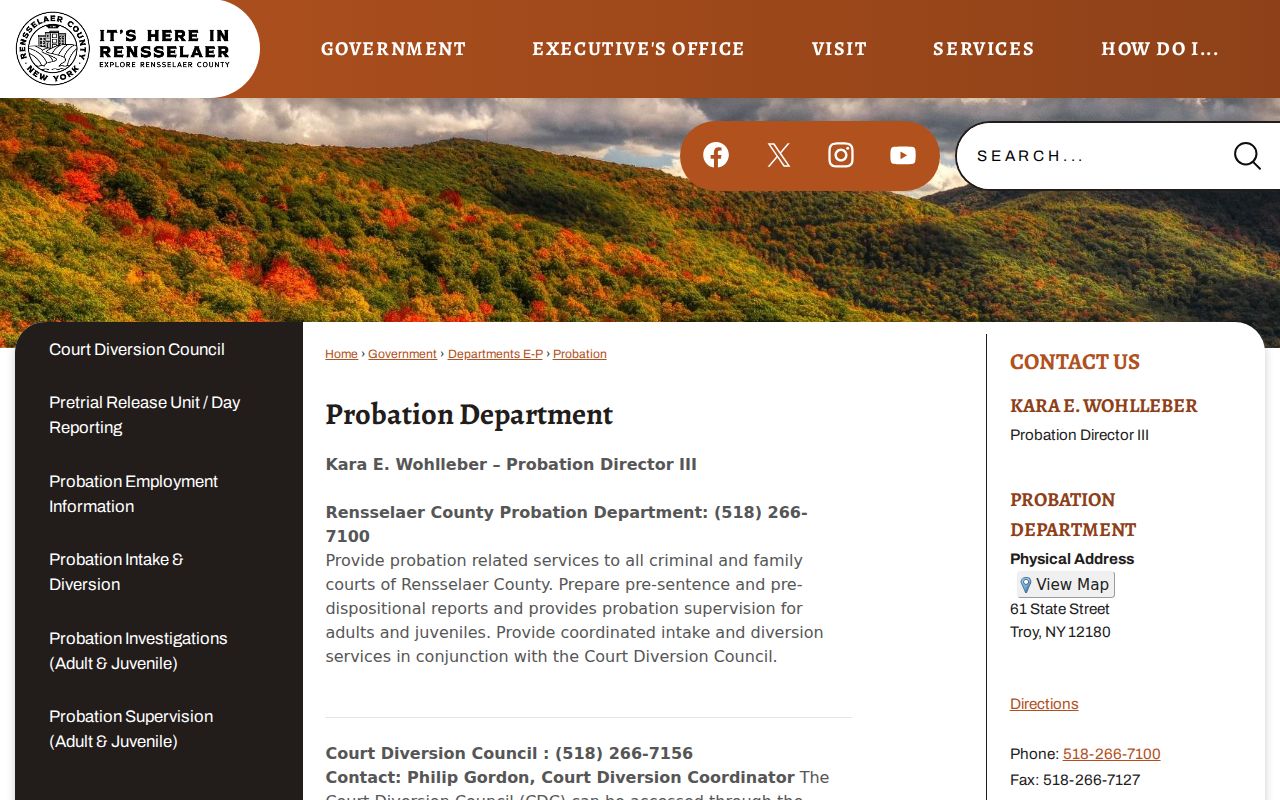
Those unit lines help distinguish a public sentence question from a restricted supervision report or pretrial status issue.
Federal custody uses a different locator. The Federal Bureau of Prisons search accepts a name or federal identifier.
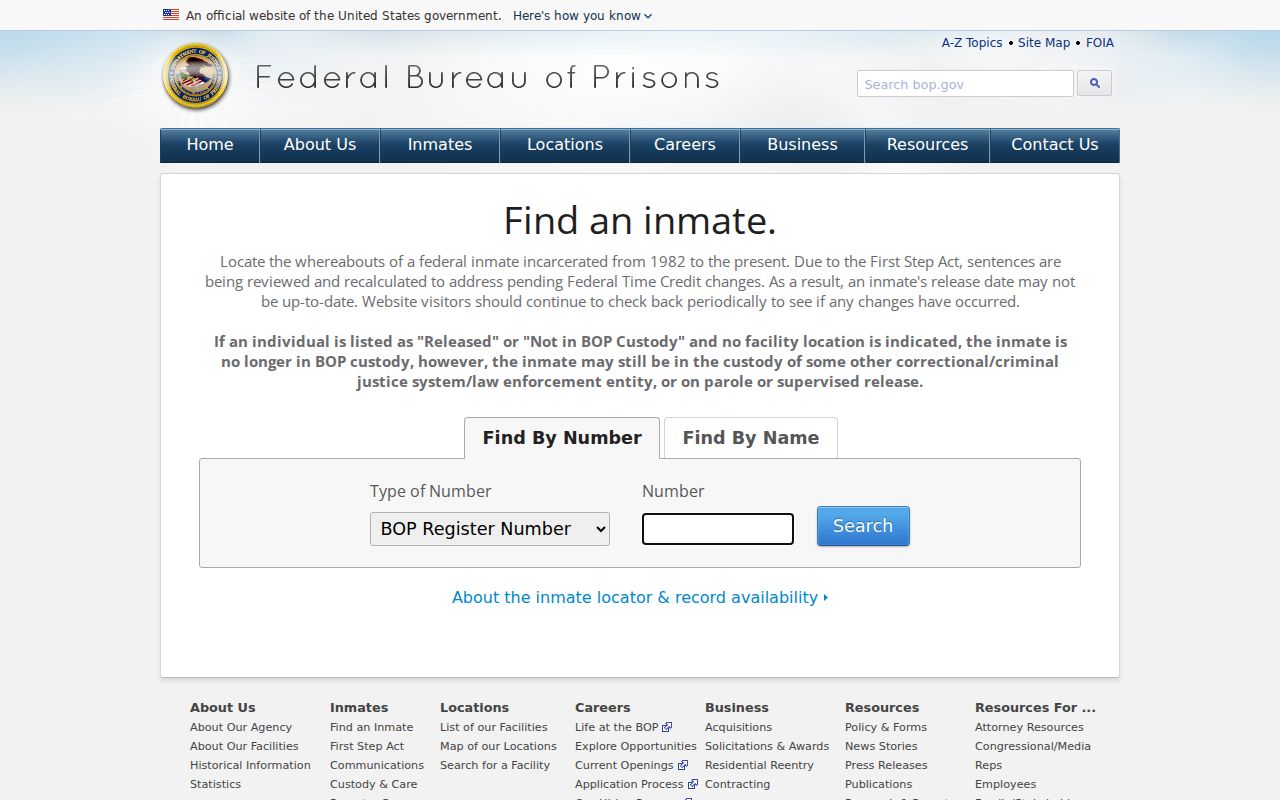
A federal result should not be confused with the county jail or DOCCS, which cover different custodians and stages.
Rensselaer County Criminal Charge Changes
An arrest charge is an officer's initial allegation. The district attorney may decline it, reduce it, replace it, or present a felony matter for indictment. That is why the charge on a jail intake may not match the accusatory instrument or final disposition. Supreme and County Court hear felony cases, while City, Town, and Village Courts handle misdemeanors, violations, arraignments, and preliminary proceedings within their authority.
The Rensselaer County District Attorney page provides the prosecution office's contact and victim-services route.
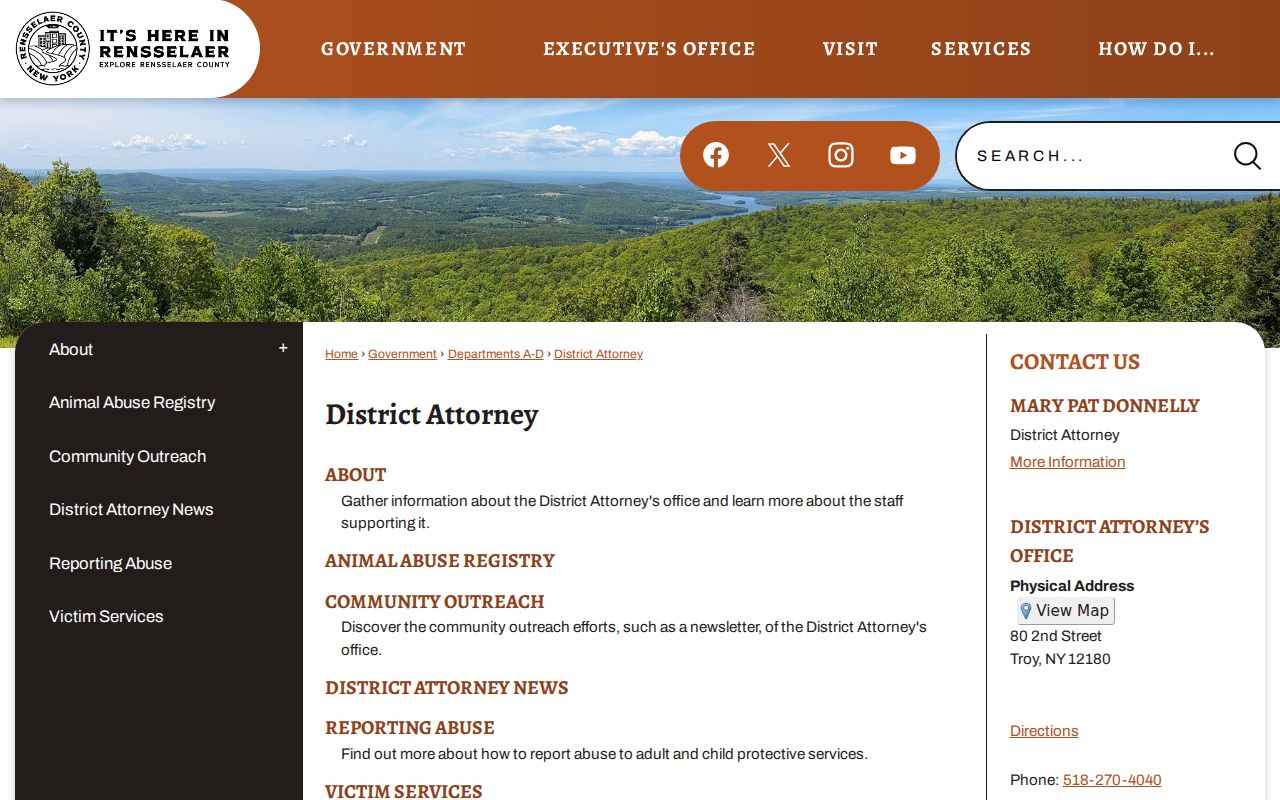
The office helps explain the charging stage, but the court clerk remains the custodian for the filed docket and final disposition.
New York offense classes also need care. Class A through E felonies generally reach Supreme or County Court. Class A and B misdemeanors and violations are commonly handled in local criminal court. The statute for the charged offense and the disposed charge control; a preliminary class shown in an arrest record does not settle the case.
Rensselaer County Criminal Records by City
Rensselaer County has two incorporated cities. Troy Police and Rensselaer Police create their own incident and arrest reports, and each city has a City Court for local criminal matters. Those city channels add detail that a county-only search can miss. Indicted felonies move to County Court, and ongoing custody is checked through the county jail.
Troy Criminal Records
Population estimate 50,912 · Police records at 55 State Street and City Court at 51 State Street.
Rensselaer Criminal Records
Population estimate 9,421 · Police records at 201 Broadway and City Court at 62 Washington Street.
East Greenbush is a town, not a third incorporated city, so its police and local court records do not belong in the city guide list.
Rensselaer County Record System History
The sheriff's office dates to 1791, but today's record system reflects many later layers. The current correctional facility opened in 1992. A construction project from 2009 through 2011 produced the present 250,000-square-foot, twelve-pod layout. Court records still center in downtown Troy, while the jail sits at 4000 Main Street and lower-court files remain spread among city, town, and village courts across a county of about 665 square miles.
That geography explains a common search mistake. “Rensselaer court” can mean a county court in Troy or City Court in the City of Rensselaer. Start with where the event happened and which judge issued the process. For warrants, no reliable official countywide public database is advertised. Confirm a bench or arrest warrant with the issuing court and law-enforcement agency. A focused FOIL request may help, but an active or sealed warrant can be withheld.
Probation adds another local layer through its Court Diversion Council, which coordinates county agencies and service providers in difficult juvenile matters. Diversion does not create a general public lookup. Detailed probation plans remain restricted, while the court docket is the proper source for a public disposition or sentence.